Introduction
A Mate 20 before the real Mate 20s are out that's lighter on your wallet but not light on features - it's the Huawei Mate 20 lite. While waiting for the big boys, we figured we'd give this midranger a go.
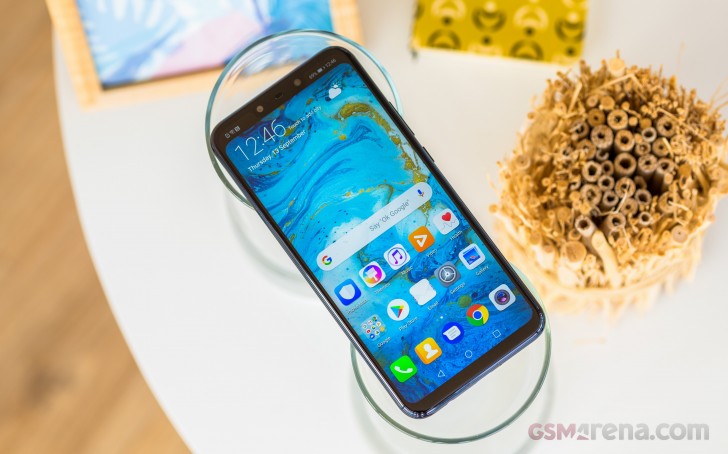
As with previous Huawei Lites, the Mate 20 edition packs one of the company's mid-tier chipsets, but this time it's a new one - instead of the ubiquitous 659, it's now the 12nm Kirin 710 that swaps out 4 of the Cortex-A53 cores in its CPU for the more powerful A73 variety; a new GPU is also part of the 710 bundle.
The Mate 20 comes with a 20MP f/1.8 primary cam instead of the 16MP f/2.2 unit found in the latest Lite, the P20. On the front, we now see a 24MP f/2.0 camera for selfies, as opposed to the P20 lite's 16MP f/2.2 module. Each of the Mate's high-res shooters is paired with an extra 2MP unit for depth detection too.
Like the true Mates, the 20 lite has a large display - in this case a 6.3-inch FullHD-ish panel in a 19.5:9 aspect, complete with the mandatory notch. Mandatory for a Mate, this Lite one has a generous 3,750mAh battery - couple that with the 12nm SoC and we're in for some pretty good endurance.
Huawei Mate 20 lite specs
- Body: Aluminum frame, glass back, 158.3 x 75.3 x 7.6 mm, 172g.
- Display: 6.3" IPS LCD, 1,080 x 2,340px, 19.5:9 aspect ratio, 409ppi.
- Rear camera: Primary 20MP, f/1.8 aperture, 27mm equiv. focal length; phase detect autofocus; secondary 2MP depth sensor.
- Front camera: Primary 24MP, f/2.0 aperture, 26mm equiv. focal length; fixed focus lens; secondary 2MP depth sensor.
- OS/Software: Android 8.1 Oreo, EMUI 8.2.
- Chipset: Kirin 710: octa-core CPU (2x2.2GHz Cortex-A73 + 2x1.7GHz Cortex-A53); Mali-G51 MP4 GPU.
- Memory: 4/6GB of RAM; 64GB storage; microSD card slot (hybrid).
- Battery: 3,750mAh (sealed), 9V/2A fast charging (but not Huawei SuperCharge)
- Connectivity: Dual SIM; Wi-Fi a/b/g/n/ac, Bluetooth 4.2; USB-C, 3.5mm jack
- Misc: Histen 5.0; dual microphones (noise reduction)
It's looking like a solid midrange package the Mate 20 lite, but let's first check out what's in the actual package.
Huawei Mate 20 lite unboxing
The Mate 20 lite comes in an understated black box with the name of the phone printed on top and on the sides of the lid. The phone's on top and underneath it there's a paper sleeve containing one of the thickest quick start guides we've seen lately (it's in a lot of languages), but also a screen protector.
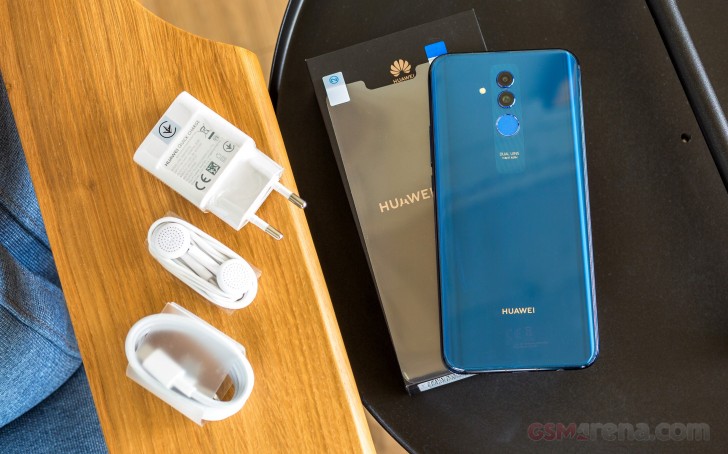
Remove that and you'll see the charger labeled Huawei Quick Charge. That's not to be confused with the Huawei Super Charge adapters that you'll find bundled with the company's proper high-end models, but it's still rated at 9V/2A, so there is some form of rapid charging involved. There's also a USB-A to USB-C cable and in a separate compartment you'll find a pair of basic earbuds to get yourself started.
Design and 360-degree spin
In a world where pretty much every smartphone has a tall notched display, it's not easy for the Mate 20 lite to stand out. Reasonably thin sides, slightly meatier chin and the horns on top - they don't make them any more standard than that, but it's not really Huawei to blame.
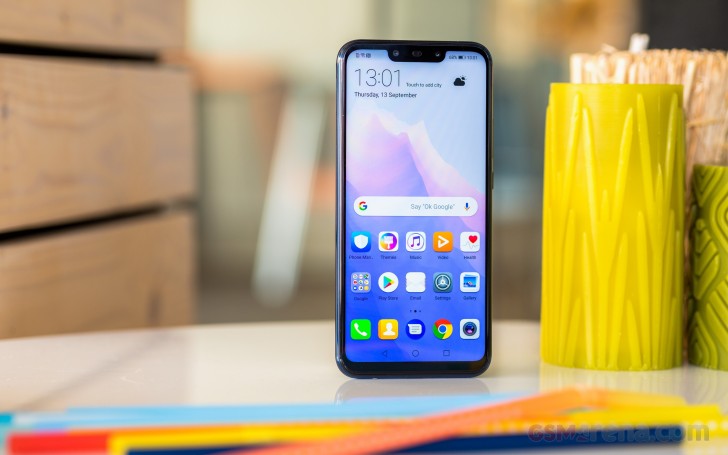
There is, perhaps, a bit of an unusual symmetry to the Mate 20 lite's notch, courtesy of the two cameras, one on each side of the earpiece. While waiting for the Pixel 3 XL, this Mate 20 lite remains the only phone with such an arrangement (alright, and a couple of other Huaweis, too).
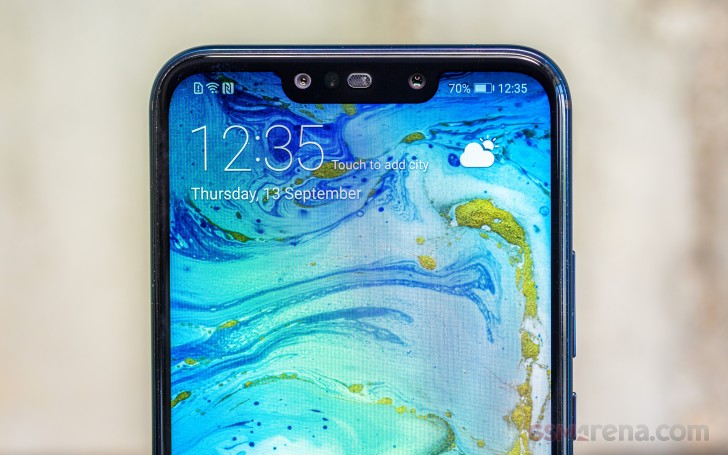
The tiny earpiece mesh also hides an LED notification/status light, while the ambient light and proximity sensors are to the left.
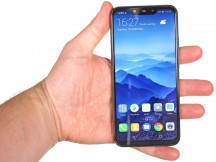
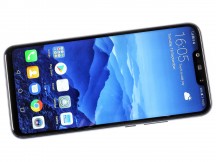
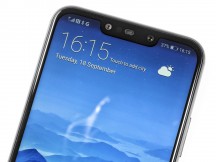
In the hand • A face like any other • Well, not quite
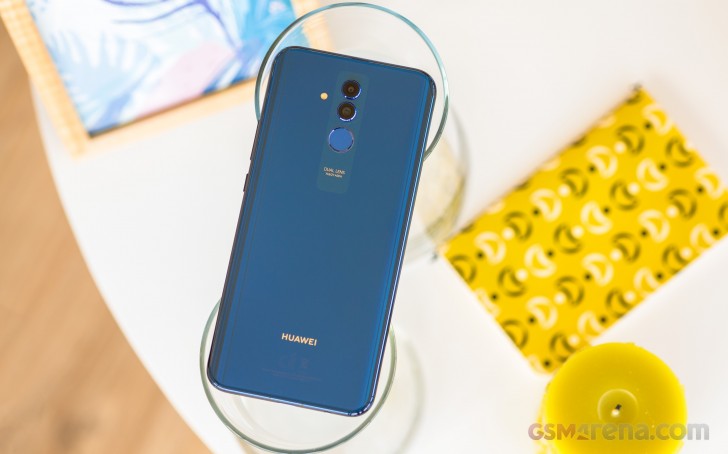
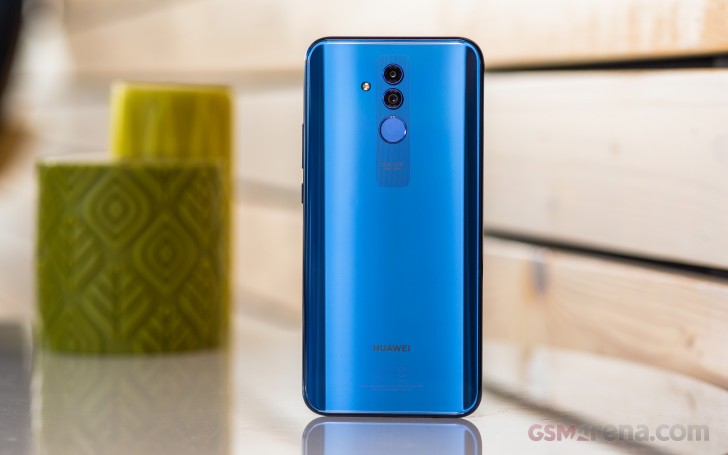
It's on the back, where the Mate 20 lite shows a lot more character. We're especially loving the Sapphire Blue color scheme that we're lucky to have on our review unit that plays all kinds of tricks with light.
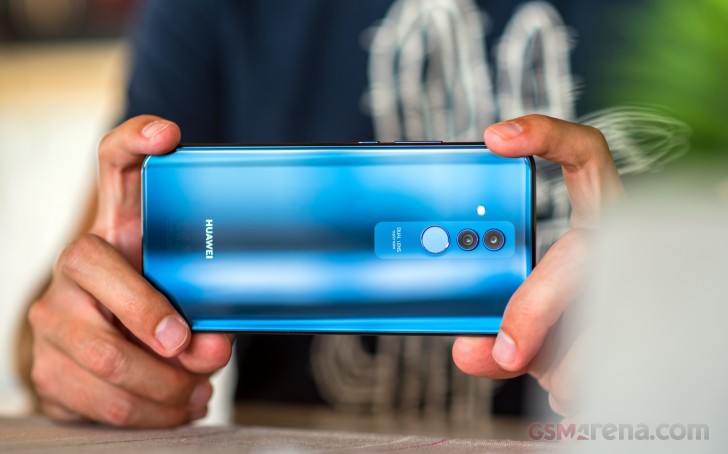
It's a glass back, just like the Mate 10 generation, and we mean the proper Mate 10s - the 10 Lite had aluminum on its back. Inspired by the Mate 10s is also the accent strip that lines the camera due and the fingerprint sensor - sure, it was horizontal on last year's flagships, but the resemblance is there.
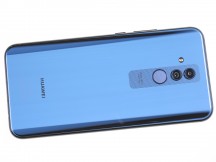
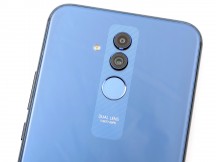
Glass back • Dual camera and fingerprint sensor along the central axis
The camera modules stick out quite a bit and have a somewhat sharpish feel to their edges, but also a nice technical look. Huawei has shown restraint with the text and only slapped a 'Dual lens' inscription plus the main specs of the primary camera's lens. We remember complaining about the P20 Pro's camera's specsheet stamped on its back, though there is, admittedly, a lot more to boast about on the flagship than there is with this modest setup.
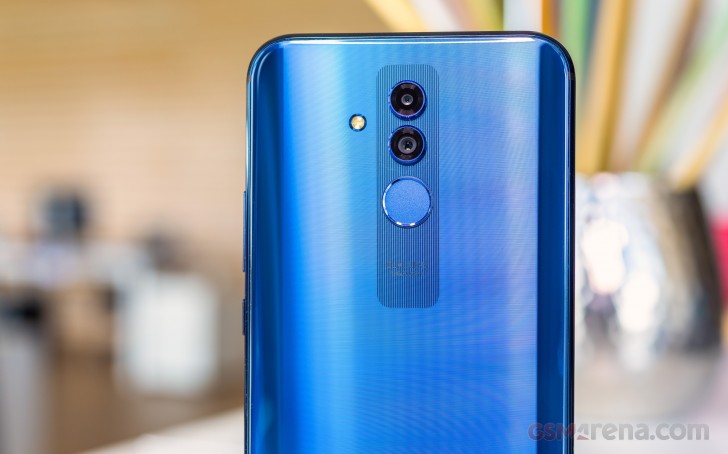
Huawei doesn't specify whether it's Gorilla Glass or another type of hardened glass, which we suspect it has to be. In any case it's pretty prone to accumulating fingerprints, but that's par for the course with glass-backed phones (unless you do something crazy like OnePlus and make a matte glass handset). There's no waterproofing, at least not IP-rated.
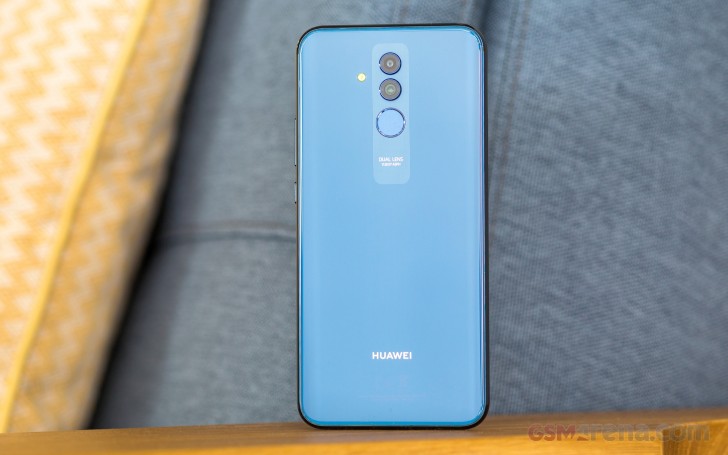
The rounded aluminum frame feels especially nice in the hand and thanks to the glossy finish has an almost iPhone X look. Almost.
The power button is on the right side of the frame, just above the midpoint, with the volume rocker above it. The buttons aren't huge, but aren't too small to pose a problem and we find them well positioned.
The card slot is on the left side, and our review unit, being a dual SIM variant, takes either two nano SIMs or a nano SIM and microSD card. Single SIM variants will obviously only work with one SIM and a microSD.
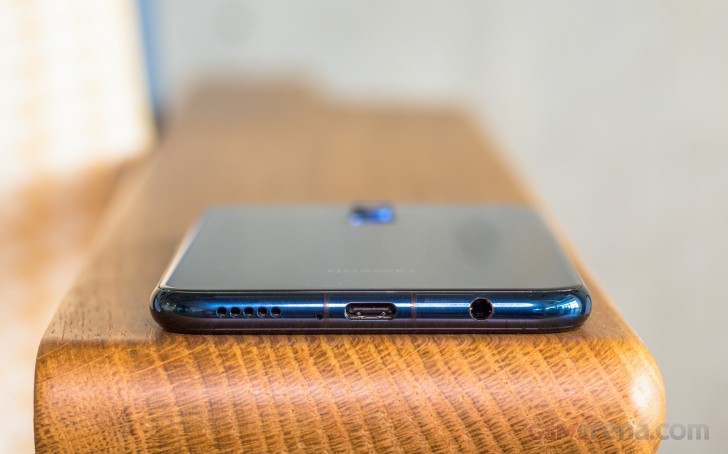
On the bottom you'll find the USB-C port in the middle - no more microUSB nonsense like on the Mate 10 Lite. Immediately to its right is the primary mic while the loudspeaker is behind a grille further to the right. The 3.5mm jack is on the opposite side. Up top there's a single pinhole for another mic.
Controls on the right • Card tray of the dual SIM variant • The usual stuff on the bottom
The Mate 20 lite measures 158.3x75.3x7.6mm, which is about what you could expect for a phone with a display this size. The Honor Play is 0.4mm shorter and a full millimeter narrower, but it's a really negligible difference.
The Mate 20 lite is, however, remarkably thin and light, particularly when you take into account its 3,750mAh battery. It's quite the pleasant surprise when you take it in your hands for the first time.
Some may say that weight alone makes a phone feel more premium and there might be some weight to that claim (a-ha!), but it's nice not having to carry more grams than necessary.
6.3-inch notched LCD
The first Huawei Mate with a notched display is the Mate 20 lite we have here, though there have been plenty of non-Mate phones in the company's lineup with cutouts on top, plus a whole bunch of Honors. Anyway, this one measures 6.3 inches in diagonal and has a 1080x2340px resolution in a 19.5:9 ratio. Pixel density works out to 409ppi.
It's not the brightest of LCDs, but it still pumps out 460nits when cranked all the way to the max - almost as much as the Mate 10 Lite. There's no boost when in auto brightness mode, just like the previous generation. The reasonably well controlled blacks mean a contrast verging 1500:1, which is a little short of the Mate 10 Lite's result, but still not half bad. We measured a minimum brightness of 0.9nits - so low, it's almost completely off.
| Display test | 100% brightness | ||
| Black, cd/m2 | White, cd/m2 | ||
| 0.313 | 460 | 1470 | |
| 0.257 | 476 | 1852 | |
| 0.254 | 432 | 1701 | |
| 0.367 | 469 | 1278 | |
| 0.418 | 610 | 1459 | |
| 0.564 | 776 | 1376 | |
| 0.27 | 482 | 1785 | |
| 0 | 387 | ∞ | |
| 0 | 568 | ∞ | |
| 0 | 455 | ∞ | |
| 0.277 | 420 | 1516 | |
| 0.314 | 461 | 1468 | |
| 0.414 | 470 | 1135 | |
| 0 | 418 | ∞ | |
| 0.29 | 526 | 1814 | |
| 0.341 | 519 | 1522 | |
Sunlight legibility is decent, but not amazing. Contrast under direct light is marginally better on the Mate 20 lite than on the P20 lite, and a step up from the Mate 10 Lite, but there are LCDs in this class than are superior in this respect.
Sunlight contrast ratio
- Apple iPhone X
5.013 - OnePlus 5T
4.789 - Samsung Galaxy S8
4.768 - Samsung Galaxy S8+
4.658 - Samsung Galaxy S9
4.63 - Samsung Galaxy S6 edge+
4.615 - Samsung Galaxy S9+
4.537 - Samsung Galaxy Note9
4.531 - Sony Xperia XZ3
4.502 - Motorola Moto Z2 Play
4.459 - Oppo R11
4.454 - Samsung Galaxy S7 edge
4.439 - OnePlus 3
4.424 - Samsung Galaxy S7
4.376 - OnePlus 6
4.321 - HTC One A9
4.274 - Oppo R15 Pro
4.251 - Samsung Galaxy Note7
4.247 - Samsung Galaxy A3
4.241 - Nokia 8
4.239 - Google Pixel 2 XL (pre-update)
4.234 - OnePlus 3T
4.232 - Google Pixel XL
4.164 - ZTE Axon 7
4.154 - Samsung Galaxy Note8
4.148 - Meizu Pro 7 Plus
4.147 - Samsung Galaxy A7 (2017)
4.124 - Samsung Galaxy S6 edge
4.124 - vivo V11
4.113 - Huawei Mate 10 Pro (normal)
4.096 - Samsung Galaxy Note5
4.09 - Huawei P20 Pro
4.087 - Xiaomi Mi 8
4.086 - Meizu 15
4.082 - Nokia 6 (2018)
4.052 - Google Pixel 2 (pre-update)
4.023 - LG V30
4.022 - Huawei Nexus 6P
4.019 - vivo NEX S
4.012 - Samsung Galaxy J7 Pro
3.998 - Vivo Xplay5 Elite
3.983 - OnePlus X
3.983 - LG G7 ThinQ (outdoor)
3.978 - Apple iPhone 7
3.964 - Oppo R7s
3.964 - Apple iPhone 8 (True Tone)
3.957 - Huawei P9 Plus
3.956 - Oppo Find X
3.954 - Meizu Pro 6 Plus
3.935 - Lenovo Moto Z
3.931 - Samsung Galaxy A7 (2016)
3.918 - OnePlus 5
3.914 - Samsung Galaxy C5
3.911 - Xiaomi Mi 8 SE
3.901 - Samsung Galaxy C7
3.896 - Samsung Galaxy A5
3.895 - Samsung Galaxy J7 outdoor
3.879 - Samsung Galaxy J2 outdoor
3.873 - Motorola Moto G6 Plus
3.865 - Samsung Galaxy A8
3.859 - Samsung Galaxy A8 (2018)
3.842 - Samsung Galaxy A6+ (2018)
3.834 - Sony Xperia XZs
3.818 - Samsung Galaxy A9 (2016)
3.817 - Motorola Moto X (2014)
3.816 - Samsung Galaxy J7 (2017)
3.812 - Samsung Galaxy A5 (2017)
3.804 - Samsung Galaxy J7 (2016) outdoor mode
3.802 - Xiaomi Redmi Pro
3.798 - LG V20 Max auto
3.798 - Sony Xperia XZ
3.795 - Samsung Galaxy A5 (2016)
3.789 - Apple iPhone 6s
3.783 - Meizu Pro 5
3.781 - Microsoft Lumia 650
3.772 - Xiaomi Mi 6
3.767 - Sony Xperia XZ1
3.765 - Samsung Galaxy J7 (2016)
3.756 - Nokia 8 Sirocco
3.745 - Sony Xperia XZ1 Compact
3.729 - Apple iPhone 8 Plus (True Tone)
3.725 - Oppo F1 Plus
3.709 - Vivo X5Pro
3.706 - Samsung Galaxy A3 (2017)
3.688 - Huawei P20
3.683 - Apple iPhone SE
3.681 - Huawei Mate 9
3.68 - Samsung Galaxy A7
3.679 - Sony Xperia XZ2 Compact
3.675 - Meizu PRO 6
3.659 - BlackBerry Priv
3.645 - Sony Xperia XA1 Ultra
3.597 - Apple iPhone 7 Plus
3.588 - Sony Xperia XZ2
3.58 - LG G6
3.556 - Apple iPhone 6s Plus
3.53 - Motorola Moto Z Play
3.526 - Samsung Galaxy J3 (2016) outdoor mode
3.523 - Samsung Galaxy J3 (2016)
3.523 - Acer Jade Primo
3.521 - Microsoft Lumia 950
3.512 - Oppo R7 Plus
3.499 - Nokia 7 plus
3.479 - nubia Z11
3.466 - Huawei P10 Plus
3.456 - HTC U Ultra
3.453 - Motorola Moto G6
3.448 - Sony Xperia XA2 Ultra
3.445 - Sony Xperia XA2 Plus
3.445 - Samsung Galaxy J7
3.422 - Motorola Moto G6 Play
3.419 - Meizu MX5
3.416 - LG V20
3.402 - Samsung Galaxy A6 (2018)
3.397 - Xiaomi Redmi Note 5 AI Dual Camera
3.393 - LG G7 ThinQ
3.39 - Huawei P10
3.379 - Samsung Galaxy J5 (2016)
3.378 - Oppo R9s
3.352 - Honor Play
3.349 - Honor 8 Pro
3.341 - Oppo F7
3.333 - Oppo R7
3.32 - Lenovo P2
3.316 - Archos Diamond Omega
3.305 - Honor 9
3.289 - Xiaomi Mi 5s
3.276 - Nokia 5
3.261 - Nokia 6 (Chinese version)
3.244 - Xiaomi Mi 5
3.24 - Nokia 6 (Global version)
3.238 - Samsung Galaxy J2
3.235 - Sony Xperia X Performance
3.234 - Xiaomi Mi Note 2
3.228 - Motorola Moto X Play
3.222 - Oppo F3 Plus
3.218 - BlackBerry KEY2
3.212 - Huawei Mate 9 Pro
3.206 - Huawei P9
3.195 - Xiaomi Mi Mix 2
3.19 - ZTE Nubia Z17
3.159 - Oppo R11s
3.153 - Lenovo Vibe Shot
3.113 - HTC U11 Life
3.108 - Motorola Moto X Force
3.105 - LG Nexus 5X
3.092 - HTC U11
3.089 - Xiaomi Mi A2 Lite
3.087 - HTC U12+
3.085 - Xiaomi Redmi S2 (Y2)
3.077 - Huawei Mate S
3.073 - Oppo F9
3.069 - Microsoft Lumia 640 XL
3.065 - Xiaomi Mi Max 3
3.061 - Xiaomi Pocophone F1
3.059 - Huawei Mate 20 lite
3.051 - Apple iPhone 6 Plus
3.023 - Asus Zenfone 4 ZE554KL
3.019 - Sony Xperia XA1
3.012 - Motorola Moto X4
3.012 - Oppo Realme 2
3.006 - Sony Xperia L1
2.994 - Sony Xperia X
2.989 - LG Q6
2.987 - Huawei P10 Lite
2.974 - Samsung Galaxy Note
2.97 - Huawei P20 lite
2.952 - Xiaomi Redmi 5
2.951 - Huawei Mate 8
2.949 - Sony Xperia XA2
2.938 - Oppo Realme 1
2.932 - Xiaomi Redmi 4
2.92 - Xiaomi Redmi 3S
2.913 - Xiaomi Redmi 5 Plus
2.913 - Sony Xperia XA Ultra
2.906 - LG G5
2.905 - Huawei Honor View 10
2.896 - Xiaomi Redmi 3s Prime
2.893 - Xiaomi Mi 5s Plus
2.884 - Sony Xperia XZ Premium
2.877 - Sony Xperia XZ Premium (sRGB)
2.877 - Sony Xperia Z5
2.876 - Nokia 3
2.871 - Sony Xperia XZ2 Premium
2.867 - Microsoft Lumia 550
2.851 - Nokia 3.1
2.837 - Lenovo Moto M
2.813 - Xiaomi Redmi 3 Pro
2.803 - Sony Xperia Z5 compact
2.784 - Honor 10 (Vivid)
2.757 - Nokia 2
2.752 - Meizu MX6
2.751 - LG V10
2.744 - Huawei Mate 10 (normal)
2.742 - Motorola Moto G5S Plus
2.737 - Xiaomi Redmi 3
2.735 - Huawei Honor 7X
2.734 - Xiaomi Redmi Note 4 (S625)
2.714 - Meizu M5
2.71 - Xiaomi Mi A2
2.696 - Sony Xperia M5
2.69 - Xiaomi Mi A1
2.689 - Xiaomi Redmi 4 Prime
2.679 - Huawei P9 Lite
2.679 - vivo V7+
2.671 - Vivo V3Max
2.659 - Xiaomi Mi Mix
2.658 - Huawei Mate 10 Lite
2.654 - Oppo F5
2.653 - Doogee Mix
2.642 - Xiaomi Mi 4i
2.641 - Xiaomi Redmi 4a
2.635 - Sony Xperia Z3
2.618 - Xiaomi Mi 5X (Standard)
2.616 - Sony Xperia XA
2.609 - Motorola Moto G4 Plus (max auto)
2.582 - Motorola Moto G4 Plus
2.582 - Meizu M5s
2.58 - Xiaomi Mi 4c
2.574 - LeEco Le Max 2
2.567 - Asus Zenfone 3 ZE552KL
2.563 - Huawei P Smart
2.563 - Microsoft Lumia 640
2.563 - Xiaomi Mi Max 2
2.561 - Xiaomi Redmi Note 5A (Y1)
2.556 - HTC U11+
2.556 - Motorola Moto G 4G
2.546 - Lenovo Moto G4
2.544 - Lenovo K6 Note
2.544 - Oppo F1
2.528 - Sony Xperia Z5 Premium
2.525 - Huawei Honor 7 Lite / Honor 5c
2.506 - Sony Xperia M4 Aqua
2.503 - BlackBerry Motion
2.494 - Oppo F1s
2.481 - Motorola Moto G
2.477 - Lenovo Vibe K5 Plus
2.473 - Huawei G8
2.471 - Huawei nova
2.467 - Sony Xperia Z
2.462 - Lenovo Vibe K5
2.459 - Meizu m3 max
2.447 - Xiaomi Mi 5X (Auto)
2.417 - HTC 10 evo
2.407 - Huawei Honor 7
2.406 - Vivo V7
2.404 - Sony Xperia E5
2.386 - ZUK Z1 by Lenovo
2.382 - HTC 10
2.378 - Oppo F3
2.376 - vivo V5 Plus
2.371 - Meizu m1 note
2.362 - Huawei nova plus
2.329 - Razer Phone
2.328 - HTC One E9+
2.305 - Alcatel One Touch Hero
2.272 - Apple iPhone 4S
2.269 - Sony Xperia L2
2.266 - Lenovo Vibe K4 Note
2.254 - HTC U11+ (EU)
2.253 - Sony Xperia C5 Ultra
2.253 - Xiaomi Redmi Note 3 (MediaTek)
2.249 - Sony Xperia C4 Dual
2.235 - Xiaomi Mi Note
2.234 - Motorola Moto G (2014)
2.233 - LG Nexus 5
2.228 - Huawei P8
2.196 - Meizu M5 Note
2.189 - Huawei Honor 6
2.169 - Xiaomi Redmi Note 2
2.166 - OnePlus Two
2.165 - HTC One X
2.158 - LG Aka
2.145 - Xiaomi Redmi Note 4 (X20)
2.145 - Archos 50 Diamond
2.134
The Mate 20 lite exhibits a noticeable blue cast in its default display mode (Vivid/Default) with whites having a deltaE of 12, and an average deltaE of 7.2 when compared against an sRGB target. Normal/Warm is overall the most accurate of the preset display modes (average deltaE of 3.5), but in this case the whites are shifted towards green, again visibly so (deltaE 7.2).
You do get the option to set a custom color profile, and we managed to obtain a good balance with the setting shown below, resulting in an average deltaE of 2.6, though whites remained slightly greenish.
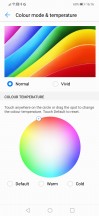
Custom color setting
Huawei Mate 20 lite battery life
The Mate 20 lite stays closer to the Mate mantra of having huge batteries with its 3,750mAh power pack - the Mate 10 lite from last year was a bit of an offender with just 3,340mAh.
Speaking of Lites, the P20 lite is the least well equipped with just a 3,000mAh cell (though, admittedly, with a smaller 5.84-inch display). The Honor Play, meanwhile, with the same 6.3-inch display, has the same 3,750mAh battery capacity, though it also packs a more powerful chipset (which all things being equal should be more power-hungry, but the Kirin 970 is made on a 10nm process vs. the Kirin 710's 12nm).
Anyway, the Mate 20 lite posted excellent scores in our battery test. Nearly 13 hours of looping videos and thirteen-and-a-half hours of browsing the web over Wi-Fi are plenty and a full day of voice calls on a 3G network isn't too shabby either. Add to that the reasonably efficient standby performance and you get a 97h Endurance rating.
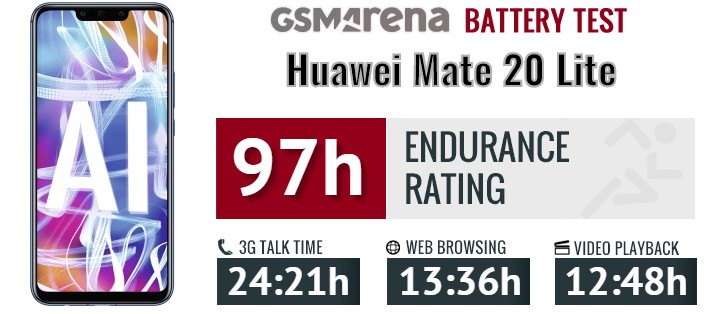
Our endurance rating denotes how long a single battery charge will last you if you use the Huawei Mate 20 lite for an hour each of telephony, web browsing, and video playback daily. We've established this usage pattern so our battery results are comparable across devices in the most common day-to-day tasks. The battery testing procedure is described in detail in case you're interested in the nitty-gritties. You can also check out our complete battery test table, where you can see how all of the smartphones we've tested will compare under your own typical use.
Charging speeds with the bundled charger are good too, though not Huawei SuperCharge level good. We clocked a full charge from flat at 1:57h, with 31% showing on the battery indicator at the half-hour mark.
Loudspeaker
The Mate 20 lite has a single bottom-firing speaker - the Lites don't get Huawei's stereo setup that reuses the earpiece as an extra channel. It's quite loud, though, falling in the Very Good bracket in our three-pronged test posting very similar results as the P20 lite and the Mate 10 Lite. We would have liked a bit more boom in the lower regions, but it is what it is.
| Speakerphone test | Voice, dB | Ringing |
Overall score | |
| 62.6 | 68.0 | 71.0 | Average | |
| 64.9 | 70.5 | 71.9 | Average | |
| 70.2 | 74.7 | 70.0 | Good | |
| 68.6 | 69.9 | 77.8 | Good | |
| 68.3 | 73.8 | 75.8 | Good | |
| 67.5 | 71.3 | 79.7 | Good | |
| 66.4 | 73.4 | 79.3 | Very Good | |
| 67.8 | 70.0 | 84.2 | Very Good | |
| 66.3 | 71.5 | 84.9 | Very Good | |
| 67.8 | 71.0 | 84.5 | Very Good | |
| 70.7 | 73.8 | 80.7 | Very Good | |
| 67.1 | 74.0 | 85.3 | Very Good | |
| 71.7 | 74.4 | 81.6 | Very Good | |
| 70.5 | 74.1 | 85.2 | Excellent | |
| 77.6 | 74.5 | 80.7 | Excellent | |
| 72.8 | 74.7 | 86.6 | Excellent | |
| 82.2 | 76.1 | 86.8 | Excellent | |
| 89.5 | 72.2 | 89.8 | Excellent |
Audio quality
The Huawei Mate 20 Lite's output with an external amplifier was mostly great except for the below average stereo crosstalk reading. The good news is that plugging headphones causes next to no damage, which is a rare sight and rarer still in the mid-range market.
Loudness wasn’t quite so impressive with the Honor Play being below average in both parts of the test. So those with a pair of high-impedance headphones might want to steer clear from that one. The rest of you should be perfectly happy with its output, though.
| Test | Frequency response | Noise level | Dynamic range | THD | IMD + Noise | Stereo crosstalk |
| +0.01, -0.02 | -94.7 | 94.7 | 0.0013 | 0.0086 | -73.1 | |
| +0.12, -0.09 | -93.8 | 93.8 | 0.0035 | 0.115 | -71.7 | |
| +0.01, -0.03 | -93.0 | 93.1 | 0.0037 | 0.0093 | -92.9 | |
| +0.12, -0.06 | -92.3 | 92.5 | 0.0027 | 0.088 | -65.7 | |
| +0.01, -0.02 | -93.6 | 93.6 | 0.0010 | 0.0069 | -93.8 | |
| +0.65, -0.08 | -91.2 | 92.5 | 0.0082 | 0.359 | -50.3 |
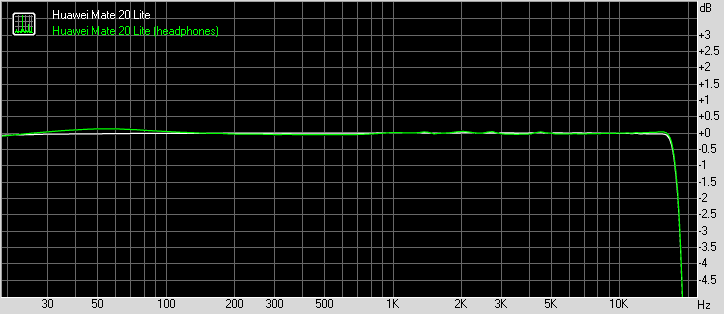
Huawei Mate 20 lite frequency response
You can learn more about the tested parameters and the whole testing process here.
Android 8.1 Oreo and EMUI 8.2
The Huawei Mate 20 lite runs Android 8.1 under its thoroughly custom EMUI launcher, v8.2 in this instance, which Android purists are guaranteed not to like. In the latest version of EMUI you'd be getting improved the Face Unlock and Gallery with machine learning, some new Gaming tricks, and a brand new Party Mode for music playback sync across different devices (how's that new, though).
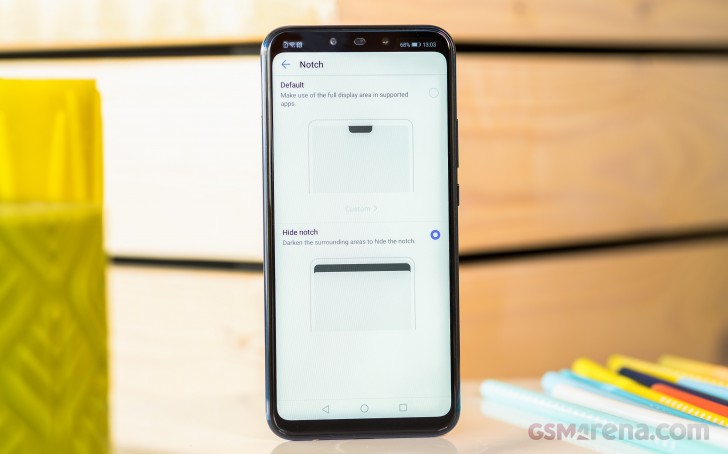
You can either embrace the notch, or you can opt to mask it with a black status bar that extends all the way down to the bottom edge of the notch.

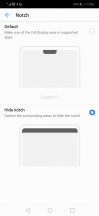
Notch control
Out of the box, there is no app drawer on the EMUI 8 - it's a single tier interface like on the iPhone. However, if you miss Android's usual layout, you can enable it back in the Display settings.



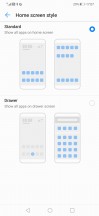


Lockscreen • Covers • Homescreen • Homescreen styles • App drawer shortcut in the middle • App drawer
EMUI has Magazine lock screen, as usual, which rotates through a bunch of wallpapers (covers), so you see a different one every time you fire up the display.

Huawei's EMUI offers plenty of customization and features like (not so secure) face unlock, smart rotation, and lift to wake. The face unlock has been enhanced with machine learning and will learn to recognize your face even with changes such as facial hair or sunglasses.
Themes are supported, too, and there is a lot to choose from.



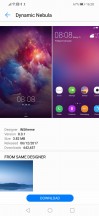

Fingerprint enrolment • Face enrolment • Themes
The notification shade is pretty much a standard affair, with the usual Huawei take on the graphics. There's a brightness slider and a row of toggles, and you pull down again for more toggles. Multitasking is pretty standard as well. Tap-holding the Recents key will let you activate split screen. You could have a video playing on top of the two windows if for some reason you find that useful.

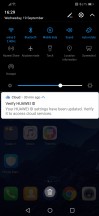
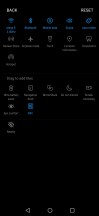



Notification area • Toggles • Toggle settings • Recent apps • Split screen • Video on top
From the Phone Manager app, you can access shortcuts to storage cleanup, battery settings, blocked numbers, Virus scan powered by Avast, and mobile data usage.
Huawei's own Music app is here and offers a way to listen to stored MP3s. Huawei's Health app is also pre-installed. It offers Google Fit syncing and step counting. There's a file manager app and a note-taking app. There is an abundance of replacements for these in the Play Store, however.
There is an improved AI-powered gallery with EMUI 8.2. The app now supports automatic sorting with highlights. The machine learning decides the sorting criteria - location, date, event, etc.



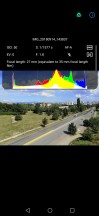

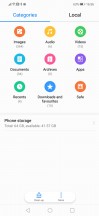
Phone Manager • Music Player • Gallery • Image details • Huawei Health • Files
The Party Mode is a new feature courtesy of EMUI 8.2, which we already saw on the Honor Play. It's available from an app of the same name and allows the user to connect to multiple phones to play the same song simultaneously.





Party Mode
There's a Game Suite on board that groups your games in one place and adds some functionality for uninterrupted gaming.


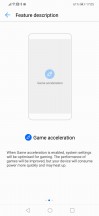

Game suite
Synthetic benchmarks
The Mate 20 lite is the first phone to utilize Huawei's own midrange Kirin 710 chipset. It's made on a 12nm process (its efficiency already proven in the battery chapter) and features an octa core CPU in a 4x2.2 GHz Cortex-A73 & 4x1.7 GHz Cortex-A53 configuration. The GPU is a Mali-G51 MP4. Our review unit has 4GB of RAM, but a higher spec 6GB version will also be available in some places.
When it comes to single-core CPU performance, the Mate 20 lite matches rather closely Snapdragon 660-equipped competitors Nokia 7 Plus and Xiaomi Mi A2 and is a clear step ahead of S636 devices. However, the Mi 8 SE (Snapdragon 710 ) noticeably is more potent, equaling the Honor Play and 10 that pack a Kirin 970.
GeekBench 4.1 (single-core)
Higher is better
- Xiaomi Pocophone F1
2438 - Honor Play
1899 - Honor 10
1894 - Xiaomi Mi 8 SE
1890 - Nokia 7 plus
1634 - Xiaomi Mi A2
1617 - Huawei Mate 20 Lite
1595 - vivo V11
1457 - BlackBerry KEY2 LE
1343 - Nokia 6.1 Plus
1331 - Xiaomi Redmi Note 5 AI Dual Camera
1329 - Huawei P20 Lite
938 - Huawei Mate 10 Lite
913 - Nokia 6 (2018)
882 - Sony Xperia XA2
865 - Sony Xperia XA2 Plus
839
As for multi-core performance, the Mate 20 lite can't quite catch up with the Nokia 7 Plus, and the Mi 8 SE is again ahead too. The Honors are predictably even more powerful. Again, phones with the lower-tier 600-series Snapdragons are behind the Mate.
GeekBench 4.1 (multi-core)
Higher is better
- Xiaomi Pocophone F1
9003 - Honor Play
6696 - Honor 10
6591 - Xiaomi Mi 8 SE
5908 - Nokia 7 plus
5893 - Huawei Mate 20 Lite
5574 - vivo V11
5535 - BlackBerry KEY2 LE
4965 - Nokia 6.1 Plus
4929 - Xiaomi Redmi Note 5 AI Dual Camera
4918 - Xiaomi Mi A2
4625 - Nokia 6 (2018)
4225 - Sony Xperia XA2
4215 - Sony Xperia XA2 Plus
4144 - Huawei P20 Lite
3756 - Huawei Mate 10 Lite
3603
In the graphics department, the Mate 20 lite is a bit behind the S660 rivals, though still ahead of the 636s and 630s of this world. The GPU is also a marked improvement over the one in the older in-house Kirin 659, but nowhere near the Kirin 970's.
GFX 3.1 Car scene (1080p offscreen)
Higher is better
- Xiaomi Pocophone F1
35 - Honor 10
23 - Honor Play
22 - Xiaomi Mi 8 SE
13 - Nokia 7 plus
9.1 - Xiaomi Mi A2
9 - vivo V11
8.2 - Huawei Mate 20 Lite
7.6 - Xiaomi Redmi Note 5 AI Dual Camera
6.3 - Nokia 6.1 Plus
6.3 - Nokia 6 (2018)
5.6 - Sony Xperia XA2
5.5 - Sony Xperia XA2 Plus
5.5 - Huawei P20 Lite
3.1 - Huawei Mate 10 Lite
2.9
GFX 3.1 Car scene (onscreen)
Higher is better
- Xiaomi Pocophone F1
31 - Honor 10
21 - Honor Play
21 - Xiaomi Mi 8 SE
12 - Nokia 7 plus
8.6 - Xiaomi Mi A2
8.6 - vivo V11
7.4 - Huawei Mate 20 Lite
6.7 - Xiaomi Redmi Note 5 AI Dual Camera
6 - Sony Xperia XA2
6 - Nokia 6 (2018)
6 - Nokia 6.1 Plus
5.9 - Sony Xperia XA2 Plus
5.1 - Huawei P20 Lite
2.8 - Huawei Mate 10 Lite
2.7
The clear distinction between the different chips is summarized in Antutu with the Mate 20 Lite splitting the small difference between the S660 Nokia 7 Plus and Mi A2, with the Mi 8 SE a step ahead of them and the 636s behind.
AnTuTu 7
Higher is better
- Xiaomi Pocophone F1
265314 - Honor Play
204876 - Honor 10
200440 - Xiaomi Mi 8 SE
170218 - Nokia 7 plus
140820 - Huawei Mate 20 Lite
136583 - Xiaomi Mi A2
130927 - BlackBerry KEY2 LE
116764 - Nokia 6.1 Plus
115571 - Xiaomi Redmi Note 5 AI Dual Camera
115195 - Nokia 6 (2018)
90918 - Huawei P20 Lite
87431 - Sony Xperia XA2 Plus
86374
Overall, Huawei's latest midrange chip is a very close match for the Snapdragon 660 but the 710 in the Kirin's name tries to position it against Qualcomm's equally numbered SoC, which is out of reach. No harm in that though - the Kirin 710/Snapdragon 660 level of performance is more than most people would need day to day.
20MP + 2MP rear shooter
The Mate 20 lite is equipped with a 20MP primary cam on the back, plus an extra 2MP module for depth detection. So it's technically an upgrade over the 16MP+2MP setup you'd find on both the Mate 10 Lite and the P20 lite, which appears to be on the Honor Play as well.
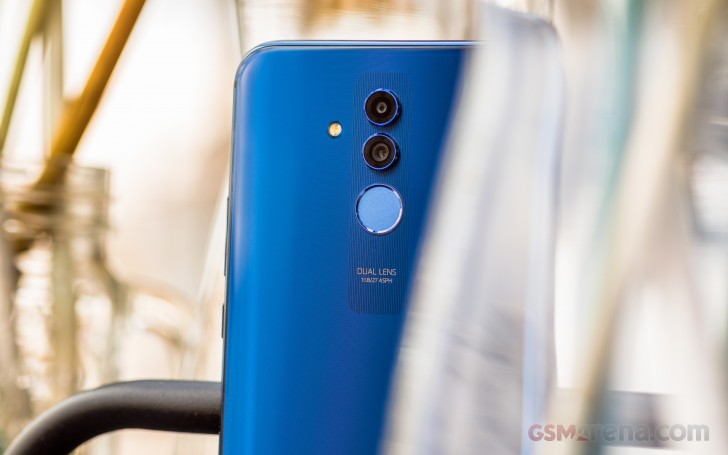
It's got an f/1.8 aperture lens (vs. the dimmer f/2.2 glass of those three), and an equivalent focal length of 27mm. Focusing is done through phase detection, and there's a single LED flash for extremely low-light shooting. There's no optical stabilization.
Let's get the AI bit out of the way first - the algorithm will recognize 22 categories of scenes and adjust image parameters accordingly, though the real-life effect, as a general rule, is pumped up contrast and heavily boosted colors. The good thing is that there's an easily accessible toggle in the viewfinder so you can enable/disable it without delving into settings.
Other than that, camera app would be familiar to anyone who's picked up a recent Huawei smartphone, which means it's messy and scattered as usual. You have a mode selector on the bottom that you swipe left and right to change modes, but you can't swipe on the viewfinder, just on the selector itself. Swiping up and down doesn't switch between front and rear camera either, you have a button for that (admittedly, on the bottom within easy reach). Basically, you're wasting the viewfinder by not having gestures enabled on it, except for pinch to zoom.


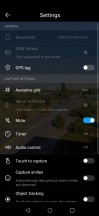
Camera interface
There's a ton of special modes in the 'More' section on the selector, including Panorama, Light painting, HDR and Pro. It's both odd that there's a dedicated HDR mode, when AI should do that for you, but it's also nice to have, since AI isn't very I in recognizing all the instances when you might want the extra dynamic range.
In the Pro mode you can adjust parameters yourself - ISO (50 to 3200), shutter speed (1/4000s to 30s), exposure compensation (-4 to +4EV in 1/3 stop increments), and white balance (presets and light temperature). You can also choose the metering mode (matrix, center-weighted and spot), and the focus mode (single, continuous and manual). If the phone thinks you messed up the exposure, an icon will pop up to warn you.
Since artificially defocused backgrounds became all the rage, Huawei and Honor phones have had both a Portrait mode and an Aperture mode. In Aperture, you can choose the simulated aperture in the range from f/0.95 to f/16. Post shot, you can change the aperture and the focus point within the Gallery.
In Portrait mode you can enable and disable the background blur (why disable it, though?), you can change the simulated lighting, and you can also add some beautification on a scale from 0 to 10.
In the not so photographic, but fun section, there's the AR lens mode with Huawei's Qmoji in there. You can choose between a number of different characters and create a gif of yourself making funny faces. The recognition is pretty good, though it's yet another implementation that refuses to do anything if you put your tongue out (not that you necessarily should, but if you're goofing around with Qmoji, it seems like the most natural thing to do).
Alternatively, you could place yourself in front a landmark with a filter applied to match the vibe of the particular spot (and also mask the fact that you're not really there). Then there's the 3D objects option which allows you to superimpose stuff on your surroundings.





3D Qmoji • Backgrounds • 3D objects
Image quality
With AI enabled, you'll get out-of-this-world photos with saturation and contrast dialed all the way up to 11. While we're fine with some extra pop, we still prefer a more restrained approach, plus you can always apply a filter post shot. If, however, you're into that over-the-top look, you know what state to keep the toggle in.









Camera samples, daylight, AI enabled
Now, turn it off, and we can talk. In bright light, the Mate's images are detailed, but perhaps not really 20MP detailed - pixel-level sharpness isn't spectacular. There's also a significant amount of noise even at base ISO, which you couldn't miss when zoomed in, but you're unlikely to be disturbed by at normal magnifications. Dynamic range is alright, though in high-contrast scenes you're likely to end up with lost detail in the extremes.









Camera samples, daylight, AI disabled
The manually engaged HDR mode helps to some extent, though it's subtle. That said, you can clearly see less burnt out highlights in both the snail's shell and the brightly-lit portions of the iPhone mural.



Camera samples high-contrast scene: Photo (no AI, no HDR) • HDR on • Photo (no AI, no HDR) • HDR on • Photo (no AI, no HDR) • HDR on
In low light, on the other hand, we rather prefer the AI on images. Sharpness and detail are comparable between shots taken with AI on and off, and while not stunning, they're quite alright. But colors are more washed out than we'd like in the AI off samples, while the AI on ones are a lot more likable. There's also a dedicated Night mode, which we hoped would be as magical as on the P20 Pros of this world, but no - we couldn't really get a sharp shot at these long exposures.



Low-light samples, AI on



Low-light samples, AI off



Low-light samples, Night mode
Once you're done examining the real-life samples you can have a look at our Photo compare tool for some studio shots. We've pre-selected the Nokia 7 Plus and the Galaxy A6+ (2018). You can, by all means, pick any other set of phones to compare once you're there.
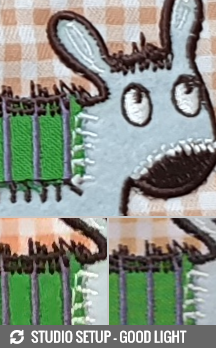
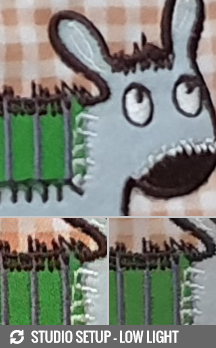
Huawei Mate 20 lite against the Nokia 7 Plus and Galaxy A6+ (2018) in our Photo compare tool
The 2MP secondary shooter is here for one thing and one thing only - depth effects - it's no telephoto, and it's no monochrome. Again, Huawei likes to makes things more complicated than they need to be, and there's a Portrait mode and an Aperture mode.
Portraits are taken at full resolution (as opposed to Aperture shots that are capped at 8MP). They're nice and detailed, and subject isolation is quite good, but on occasion we found the background blur didn't kick in without any apparent warning - so you could end up with regular shots despite taking them in Portrait mode. You can apply different styles of lighting effects, but more on these in the selfie section.


Portrait samples

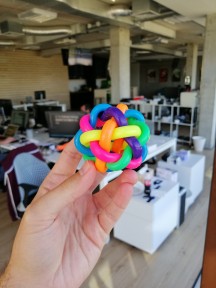
Portrait samples, non-human subjects
Aperture mode sets the resolution at 8MP and takes away the beautification and lighting effects but gives you control over the simulated aperture and consequently blur level - you know, the thing that Apple invented this year and Huawei's had for ages.




Aperture samples




Aperture samples, non-human subjects
Even higher-res selfie camera
The Mate 20 lite packs a 24MP main selfie camera - that's 4MP more than the one on the back. It's got a slightly narrower aperture (f/2.0), buts a slightly wider focal length (26mm). Another 2MP depth sensor is on the display side of the Mate too.
For all its megapixels, the Mate's selfies aren't all that sharp. Don't get us wrong, they're alright, there's just not 24MP worth of detail in those images. One more thing - switching to the selfie cam takes you to Portrait mode instead of the regular Photo, which we don't find ideal.



Selfie samples
You get the same Portrait mode with simulated lighting. The effects are called soft, butterfly, split, stage, and classic.



Selfie samples, Portrait mode



Selfie samples, Portrait mode, 3D lighting
Video recording
The Mate 20 lite records video at up to 1080p resolution and it comes in standard 30fps flavor, but also a smoother 60fps. Electronic stabilization isn't available in 60fps, though.
Video is encoded using the h.264 codec by default with a toggle to switch to h.265 if you so wish. That said, the bit rates with h.264 are more in line with what you'd get with the more efficient h.265 from other phones - 1080p/30fps videos get around 10.8Mbps, while 1080p/60fps is treated to about 17Mbps. Audio is always stereo, recorded at 192kbps.
1080p/30fps footage is nice and detailed, though it's got plenty of aliasing (jaggies) that more competent processing tends to remove. There's probably a bit too much contrast - perhaps a slightly different tone curve that would have resulted in a little brighter shadows could have been better. Colors are pretty nice, though.
1080p/60fps is smoother in more than one way - the smoother action we appreciate, but the overall softness is hard to like. The 60fps mode comes at the expense of a tighter crop too.
The stabilization does a wonderful job of smoothing out wobble and handshake and has no issues with panning either. Given the soft 1080p/60fps output we hardly miss the stabilization there.
You can download short untouched samples as well - 1080p/30fps (10s, 15MB) and 1080p/60fps (11s, 22MB).
The last stop is, of course, our Video compare tool where you can compare the Mate 20 lite's output against other phones we've tested. We've pre-selected the Nokia 7 Plus and the Samsung Galaxy A6+ (2018), but a different set of devices is only a few clicks away.
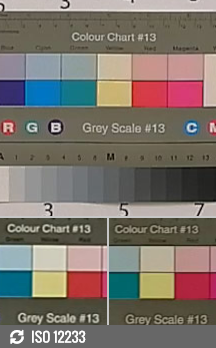
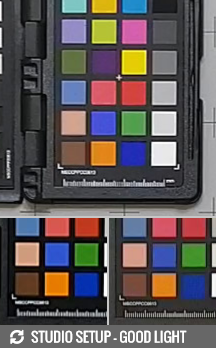
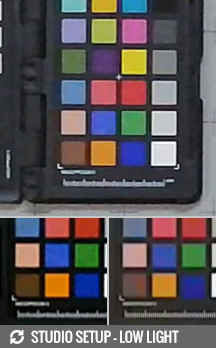
Huawei Mate 20 lite against the Nokia 7 Plus and the Galaxy A6+ (2018) in our Video compare tool
Competition
Huawei's huge smartphone portfolio inevitably means there are a ton of options within the company's own lineup. The Honor Play we reviewed recently immediately comes to mind offering the soon-to-be-replaced flagship Kirin 970 chipset which is substantially more powerful than the Mate 20 lite's Kirin 710. The Mate wins the stills camera battle, but you may want the Honor's 4K video. The Honor is substantially cheaper making things extra difficult.






Honor Play • Huawei P20 lite • Nokia 7 plus • Galaxy A6+ (2018) • Xiaomi Mi 8 SE • Xperia XA2 Plus
The P20 lite has a weaker chip than the Mate 20 lite, and shorter battery life, but is even more affordable than the Honor Play. You'll be sacrificing some of the camera prowess, but you'll also be getting a more compact package.
Once you've got your Huaweis all sorted out, you should probably have a look at the Nokia 7 Plus. Its Snapdragon 660 is at least as powerful as the Mate 20 lite's Kirin 710 and battery life is almost as good. It's got a telephoto camera, however, and can also record 4K video, which the Mate doesn't. The Android One on the Nokia will please purists and the slightly lower price will please... well, everyone.
Another in a list of more affordable alternatives, the Samsung Galaxy A6+ (2018) will give you a better display and even longer battery life, but a significantly slower chip and a microUSB port (what year is it?).
No such issues with the Mi 8 SE, whose Snapdragon 710 outperforms the Kirin 710 in the Mate 20 lite, and it can do the number crunching for 4K recording too. Battery life is in the Mate's favor overall, though not by much, and the Mi's lack of a headphone jack is a bummer, especially in this class.
The Xperia XA2 Plus has all the right ports and jacks, so no advantage over the Mate on this front. It does match it in battery life, and sells for almost the same money, but is lacking depth cams on either side. Its otherwise not as potent Snapdragon 630 can record 4K video nonetheless.
Verdict
Having the flagship's name is good and all, but Huawei's priced the Mate 20 lite without accounting for the 'lite' bit too much, and we're not liking the numbers. It's a good overall package, with excellent battery life, decent display and good image quality from its two (real) cameras. But other phones offer those too, some even outperform the Mate in key areas, and often at a lower price. Carrier subsidies could sway things in any direction, but at full retail (north of €400)р we find the Mate 20 tough to recommend.
Pros
- Light, without feeling cheap
- Battery life to spare
- Good all-round camera experience with some creative options
Cons
- Expensive for the hardware
- Derivative design
- No 4K video recording, poor quality 1080p/60fps (though not bad 1080p/30fps)
0 Response to "Huawei Mate 20 lite review"
Post a Comment